A blind ranking is a game where items are revealed one at a time and you have to put each into a numbered slot, usually 1 to 10, before you see the next one. Once an item is placed it stays there. You cannot move it when something better or worse shows up later.
The whole game lives in that last rule. Because you never know what is still coming, every placement is a small bet, and the fun is watching someone commit to a number and then regret it three items later.
How does a blind ranking work, step by step?
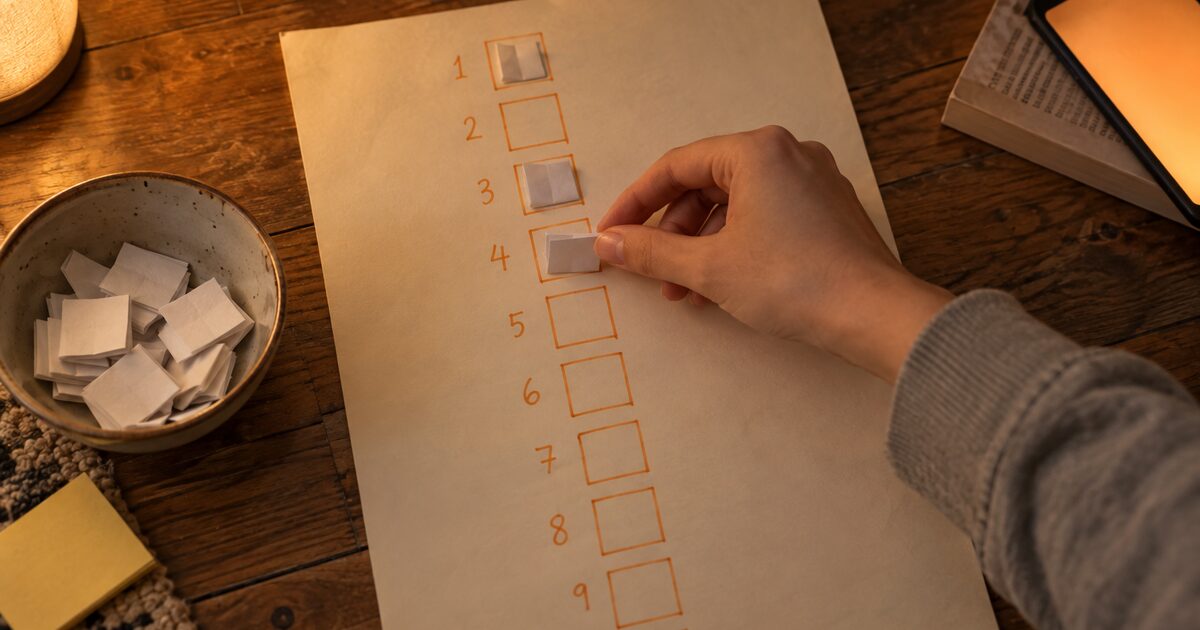
Draw ten empty slots, top to bottom, numbered 1 to 10. Shuffle ten items from one category, keep them hidden, and reveal them one at a time. For each one, the player picks an empty slot and the item is locked there. When all ten are placed, the list is final, however wrong it looks.
Game Rant, which released its own Blind Rank game in May 2026, puts the core of it plainly: you lock in each choice before you know what is coming next. The same rule holds whether the game is played on a website or filmed in a living room.
A few variations are worth knowing. Some games use five slots instead of ten, which makes each round shorter and each mistake more costly. Some let the audience see all the items in advance while the player cannot, which turns every placement into a moment the viewers are shouting at. And some are played in pairs, two people ranking the same reveal order separately and comparing lists at the end.
How is a blind ranking different from rating 1 to 10?
This is the confusion worth clearing up, because both use the numbers 1 to 10 and they are completely different games.
In a blind ranking, the numbers are slots, and each slot can be used only once. If you put your first item at number 2, nothing else can ever be number 2. The items are competing with each other, including items you have not seen yet.
In a 1 to 10 rating, the numbers are scores, and any number can be used as many times as you like. You can give three things a 9 in a row. Each item is judged on its own, and nothing that comes later changes it.
That second format is what most ranking filter clips actually do. A prompt appears, you react, you tap a score, and the next prompt has nothing to do with the last one. There is no leaderboard to fill and no way to make a permanent mistake, which is why it is easier to film and harder to lose. The ranking filter explainer covers that loop in detail.
The name makes it messier. TikTok’s Effect House documentation includes a template called Blind Rank that has players tap a score from 1 to 10 for a series of food images, with the image set and the number of items adjustable. So a platform template carries the blind ranking name while using a 1 to 10 scale, and creators use both names for both games. If you want to settle an argument about what counts, ask one question: can two items share a number? If they can, it is a rating. If they cannot, it is a blind ranking. The longer explainer on the ranking filter trend goes into where the two names came from.
What is the strategy for a blind ranking?
There is a real one, and knowing it makes the game more fun to watch, because you can see exactly when someone blows it.
Do not spend the top slot early. The classic mistake is putting the first good item at number 1. With nine items still hidden, the odds that something better turns up are high, and when it does, it has nowhere to go. Unless the first item is unmistakably the best thing the category could contain, put it at 2 or 3.
Do not spend the bottom slot early either. The same logic runs in reverse. A weak first item is not necessarily the weakest of ten. Park it at 8 or 9 and keep 10 open for the true disaster.
The middle fills up faster than you think. Most items in any category are fine. That means slots 4 through 7 get crowded early, and by the sixth or seventh reveal you will often be choosing between a slot that is too high and one that is too low. That squeeze is the best moment in any blind ranking clip, because the player has to pick which way to be wrong.
The last item places itself. By item ten there is one slot left, and the item goes there no matter what it is. If the best thing in the category comes out last and the only open slot is number 9, that is the clip. Let it land.
How do you build your own blind ranking set?
Many blind rankings online use pop culture: players, characters, snacks by brand. You do not need any of that. The best homemade sets are categories where everyone has an opinion and nobody is an expert.
A good set has three properties. The items are all the same kind of thing, so they can be compared. They cover a real spread, a few great, a few terrible, most in between, so the slots actually matter. And nobody in the room can predict the order, which means shuffling properly and keeping the list hidden from the player.
Ten categories that work without naming a single brand:
- Breakfast foods, ranked by how good cold
- Household chores, from least to most hated
- Ways to spend a snow day
- Sandwich fillings, best to worst
- School subjects, ranked honestly
- Pizza toppings nobody agrees on
- Sounds you hear at night
- Things to find in a coat pocket
- Weekend plans that sound better than they are
- Desserts that are really just breakfast
Write each item on a folded slip, shuffle them in a bowl, and draw one at a time. Draw ten slots on a sheet of paper or a whiteboard, big enough for the camera to read, and write each item into its slot as it is placed. If you would rather skip the slot game entirely and run a straight rating round, the this or that questions list gives you pairs you can pick in two seconds, and scoring how hard each pick was turns them into a rating round with no setup at all.
How do you film a blind ranking so it works on camera?
Frame the player and the board together. The clip only makes sense if the viewer can see the slots filling, so the board needs to be in shot for every placement, not just at the end.
Say every item out loud before placing it, and pause for a second on the placement. That pause is where the viewer decides whether they agree, and it is the part that turns into comments. Then end on the full board, held still for two or three seconds, so the final list can be read and argued about.
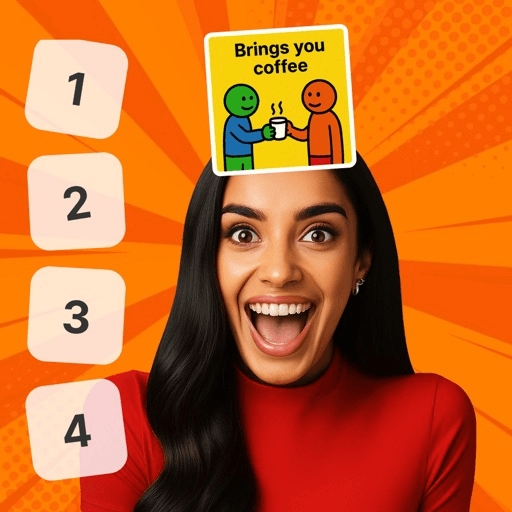
If you would rather film the looser version, where each prompt gets its own score and there are no slots to fill, Ranking Filter deals the prompts at random above your head and records the 1 to 10 rail into the clip, so you are reacting to each prompt as the camera sees it. That is the rating game, not the slot game, and for a clip where the reaction is the point, it is the easier one to film well. For a round where one person takes rapid questions instead of ranking items, the hot seat game runs on the same nerve.