Friendsgiving is the one holiday meal where everyone at the table chose to be there, which makes it the easiest crowd there is for a game. The five below need nothing to buy or download, just the people and, for one of them, some paper and pens.
Friendsgiving games work best when they match the stage of the evening. Use a fast this or that round while people arrive, a blind ranking of the dishes once everyone sits down, a kind version of most likely to between plates, an anonymous guessing game at dessert, and the hot seat once everyone is on the sofa.
Merriam-Webster defines Friendsgiving as a celebration or meal shared among friends on or near Thanksgiving Day. The friends part matters for picking games. A family table spans three generations and needs prompts a grandparent and a child can both answer, which is what the Thanksgiving would you rather questions are written for. A friend group knows each other, has inside jokes and can handle games that lean on that.
Which Friendsgiving games work while people are still arriving?
The first hour of any Friendsgiving is people trickling in with dishes, coats going on the bed, and someone checking the oven. You need a game that anyone can join mid-round and leave without breaking it. That rules out anything with teams or scores.
This or That at the counter. One person reads a pair, everyone in the kitchen answers on three, and the minority has five seconds to defend themselves. New arrivals just start answering. Keep the pairs about food and hosting so they fit the evening.
- Bring a side dish or bring the dessert?
- Host the dinner or show up late?
- Mashed potatoes or roasted potatoes?
- Pie you made or pie from a bakery?
- Set the table or carve the turkey?
- Paper plates or the nice plates?
- Leftovers for a week or no leftovers?
- Eat at the table or eat on the floor?
- Make the gravy or wash the gravy pan?
- Arrive early to help or arrive right on time?
Ten pairs is roughly five minutes with a kitchen of six people, which is about as long as anyone stands still before the food needs them.
What game works once everyone sits down?
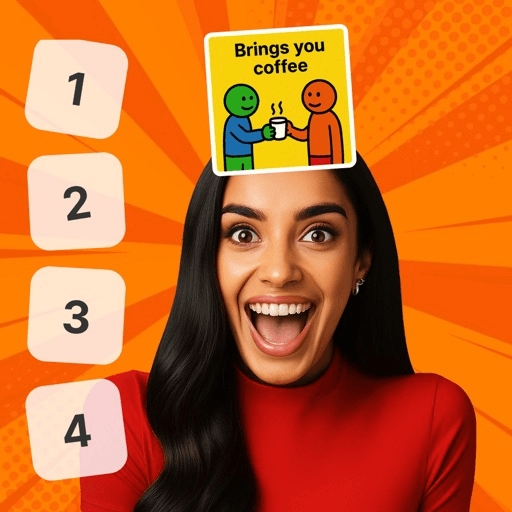
Blind rank the table. This is the one most groups have never played and the one they talk about after. Pick five dishes that are actually on the table. One person reads them out one at a time, and each player has to place each dish in a slot from 1 to 5 before hearing the next one. No moving a dish once it is placed. Then everyone reveals their full order.
The fun is the same as any blind ranking: you put stuffing in slot 2, then the host’s homemade rolls come up and there is nowhere good left. Whoever made a dish that lands in slot 5 is allowed one sentence in its defense.
Good blind ranking sets for the table:
- Five sides on the table, in the order they were brought
- Five desserts, read out before anyone tastes them
- Five drinks: apple cider, cocoa, lemonade, tea, sparkling water
- Five leftover sandwiches you could make tomorrow
- Five ways to eat cranberry sauce
Play one round per set. Two rounds before the main course is plenty; after that, people want to eat.
What should you play between plates?
Most likely to, the kind version. Someone reads a “who is most likely to” prompt, everyone points at the same moment on three, and the person with the most fingers on them gets to respond. Most likely to is where friend groups get mean without meaning to, so the rule is simple: every prompt has to be something the person would be glad to be picked for.
- Most likely to remember everyone’s birthday?
- Most likely to bring a dish nobody expected?
- Most likely to stay late to wash up?
- Most likely to start a new tradition?
- Most likely to know every word of a song?
- Most likely to adopt three dogs?
- Most likely to plan next year’s Friendsgiving?
- Most likely to give the best advice?
- Most likely to win a cooking contest?
- Most likely to make a stranger laugh?
If a prompt starts a pile-on, skip to the next one. The point is a round of compliments disguised as a game, which is a surprisingly good fit for a dinner built around being thankful for friends.
Which game is best at dessert?
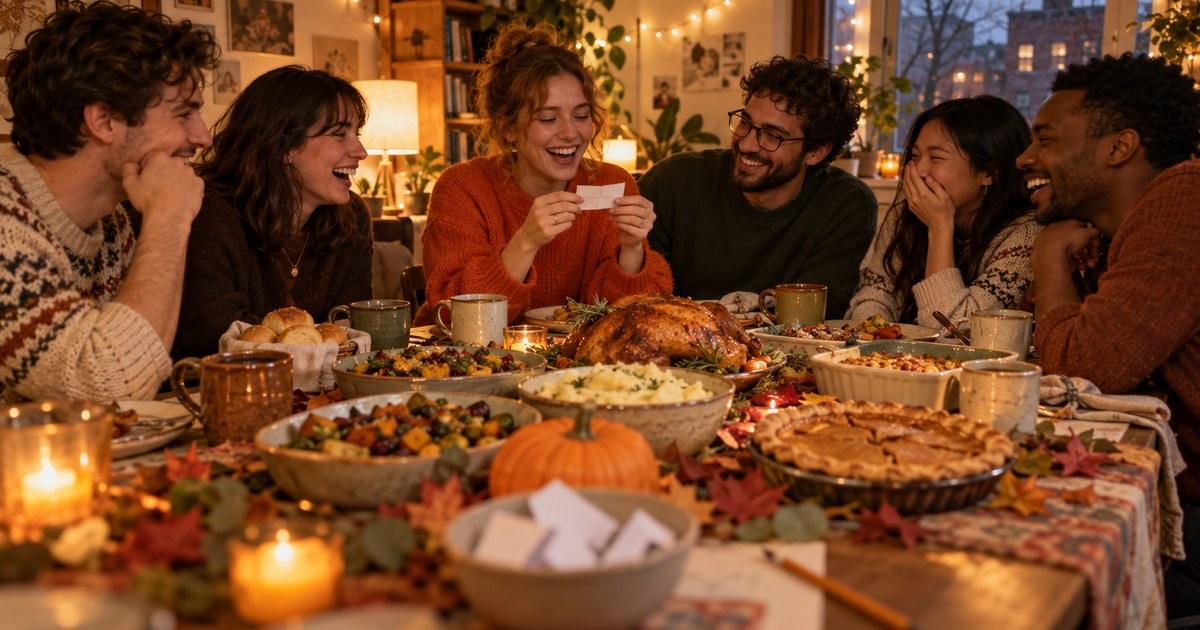
Guess who wrote it. Hand out scraps of paper. Read one prompt aloud, everyone writes a short answer and folds it, and the slips go into a bowl. One person reads them out and the table guesses who wrote each one. A correct guess gets a point; fooling everyone gets two.
Dessert is the right moment because people are full, sitting still and starting to drift. The guessing pulls them back in, and it rewards the friends who know each other best.
- The best meal you have ever eaten
- A food you refused to eat as a kid
- Your most useless talent
- The first thing you would buy with a free afternoon
- A tradition you would start from scratch
- The best advice someone at this table gave you
- A skill you want to learn this year
- Your ideal Friendsgiving dessert, invented right now
Plan on six to eight prompts for a table of eight; that is usually enough to last through dessert. The answers that win are the specific ones, so push people past “pizza” and toward “my aunt’s burnt-edge pizza from one summer”.
How do you end the night on the sofa?
The hot seat. One person sits in the middle, the rest of the group asks questions for 60 seconds, and the person in the seat can skip once. Then they pick who goes next. It works best last because by then everyone is warmed up and nobody minds the spotlight.
The full hot seat rules cover the order to ask questions in. For a Friendsgiving round, open with these:
- What dish did you almost bring instead?
- Who here have you known the longest?
- What are you most thankful for this year?
- What is your strangest holiday tradition?
- Which friend would you call at 3 a.m.?
- What did you get wrong about someone here?
- What should we do differently next year?
Go around until everyone has had a turn or until someone falls asleep, whichever comes first.
How many games should you plan?
Three, not five. Pick one for the arrivals, one for the table and one for the sofa, and treat the others as backups. A Friendsgiving with a game every twenty minutes starts to feel like a work retreat. The best nights have long stretches where nobody is playing anything and the games are there for the moments the conversation stalls.
If the group is under six people, skip most likely to; it gets awkward when there are only a few people to point at. If the group is over twelve, run the blind ranking in pairs so the reveal does not take half an hour.
Should you film any of it?
The blind ranking is the clip worth keeping. Put the phone at one end of the table, wide enough to see most of the faces, and film one full round from the first dish to the reveal. The reaction when someone runs out of good slots is the part people want to watch again.
If nobody wants to be the person reading a list off their phone at dinner, Ranking Filter deals the prompts at random over whoever is holding the phone and records each answer with a 1 to 10 rating, so the phone can go around the table instead of one person running the game.
For more pairs to use at the counter or on the sofa, the would you rather questions list has a full bank, and the hot seat questions list has enough to give every guest a turn.